
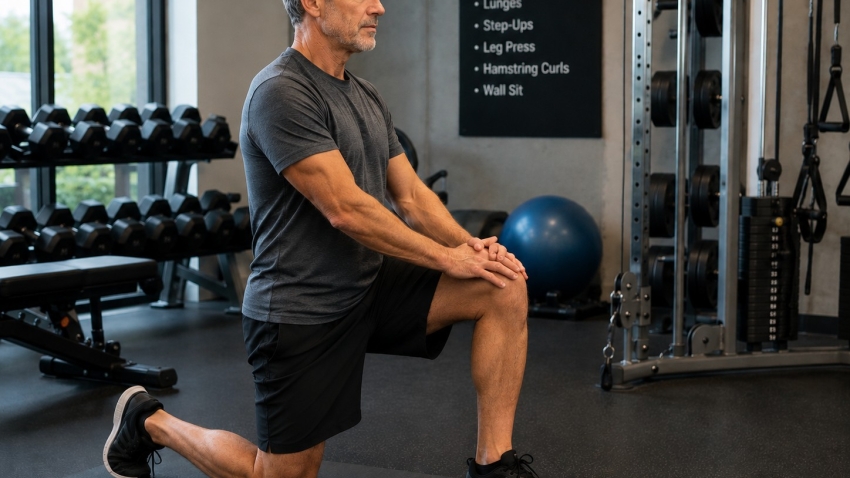
Exercise Strategies for Retirees with Joint Replacements
One of the facts of life is that, as you get older, your joints tend to wear down. As you age, wear and tear affects your knees, hips, and other joints. That leads to pain, difficulty moving, reduced range of motion, and more. Eventually, for a lot of people, joint replacement is necessary.
Joint replacement can help restore pain-free movement, but it can also change the way you exercise. You may also hesitate to be active again, out of concern that you’ll hurt yourself or just because you’re not sure of what you can do.
However, exercise is incredibly important. One of the best things you can do for your overall health is to stay active. One of the most positive things today is that knee replacement and hip replacement surgeries are less invasive than they were in the past and there’s a good chance that you’ll be able to be quite active once you have recovered from surgery and rehabbed the area. In fact, depending on your condition before the joint replacement, you might be able to do more than you could before the surgery.
That said, an artificial joint likely won’t perform the same way as your natural joint. You may still experience some pain, stiffness, or reduced range of motion. This could require you to adjust your fitness routine.
Rehab Exercises
Don’t let joint replacement ruin your retirement! There are a lot of exercises you can do to help improve your range of motion along with your overall health.
Each health situation is different, of course, but it’s generally a good idea to get active shortly after your surgery. Of course, listen to your doctor and follow their advice. Joint replacement recovery can take between six and 12 months, but most people start some sort of light exercise routine a couple of weeks after surgery.
The way you exercise will also be based on how active you were before the surgery. If you weren’t very active prior to joint replacement, it will take you longer to get up and going than if you were regularly doing intense exercise.
During rehabilitation, you’ll want to do exercises that let you move your body without putting too much pressure or stress on the affected joint. At first, walking slowly will be a good idea. How much pressure you place on your leg will depend on your situation.
Don’t hurry but walk in an even pattern and as rhythmically y as you’re able. You might need to adjust the length of your steps do that you can walk smoothly.
There are a few other activities you can do to rehab your body after surgery. This includes:
- Straight Leg Raises: This exercise can be done while lying down or sitting. Keep your knee straight, tighten your thigh muscle, and slowly lift your leg. Hold for several seconds and then slowly lower. Repeat until you feel fatigued.
- Quadriceps Sets: You can also do this lying down or sitting. Keep one knee bent, with your foot flat on the surface. Then tighten your thigh muscle and try to straighten your knee as much as you can. It doesn’t sound like much, but it can really help strengthen the area.
- Knee Bends: There are various types of knee bends. You can do this exercise from your stomach, your back, or sitting in a chair. The goal is the same: to give your knee more strength and flexibility. Bend your knee as far as you can and hold it. Repeat several times, then switch knees.
The goal in all these exercises is to help the surgically repaired joint regain strength and movement.

Exercise After Rehabilitation
You’ll want to stay active after you’re back on your feet and feeling confident with your joint replacement. However, it can be a good idea to stick with lower impact exercises, at least at first, until you see how your joint responds.
Preserving flexibility and range of motion are highly recommended. Using a stationary bike is a very good idea. Even if you didn’t enjoy using one before the surgery, many doctors recommend this activity because it’s lower impact and helps keep you moving.
This exercise helps because it is low impact and doesn’t put stress on your joints. Try to avoid exercises that require quick twisting as well. If your knee or hips need twist excessively as a part of the sport or exercise, this can strain the joint and increase your risk of injury.
If you’ve had knee replacement surgery, you will also want to avoid exercises that require you to bend your knee in a way that lets it extend past your toes. For instance, if you’re doing squats, don’t squat too deeply. Instead, focus on stopping at a comfortable angle.
Whatever exercise you do, it’s important to speak to your doctor before you get going. Each person is different and your body may respond differently to the joint replacement than expected. Talking to a doctor helps you get recommendations that are right for you.
Stretching, Balance, and Endurance
It’s always a good idea to stretch before exercise, but this is especially important if you’ve had a knee or hip replacement. This reduces stiffness, helps improve mobility, and can help with balance and strength as well.
Your movements when stretching should be gentle and controlled. Avoid overstretching or bouncing when you stretch. Instead, focus on using proper technique and hold each stretch for 15-30 seconds.
Build up endurance over time. Remember, this is a new joint that you are not used to. Long walks, stationary bike sessions, or swimming can be excellent exercises because they’re low impact, but also because you can gradually lengthen your sessions to build up more endurance. This is great for your heart and your overall health, but it can also keep your joint replacement working well.
Balance is crucial as well. Your body will need to adapt to the joint replacement, and it may feel awkward to move at first. The way to adjust to this is by focusing on balance and coordination. Perform balance exercises like tandem or single leg stands, as the end of each workout. It’s a good idea to keep a chair or a railing nearby so you can catch yourself if you stumble.
Listen to your Body
It’s always vital to listen to your body when exercising, but especially after you’ve had a joint replacement. Slight discomfort or soreness can be common, but pushing through strong pain can increase your risk of injury.
If you feel pain, dizziness, or feel like you might faint or pass out, stop exercising and talk to your doctor.
Pace yourself and do not try to do too much. Once of the biggest risks with knee or hip replacement surgery is falling. When you’re first starting to exercise after surgery, you’ll want to walk on flat and even surfaces before progressing to hills and inclines.
This strategy is important for basically all workouts and exercises. Start slowly and give your body time to adapt. Take it slow and then gradually ramp up activity and the duration of your workout. Different people heal different ways, but most people are eventually able to return to an active lifestyle with few restrictions. In some cases, with guidance from a doctor, you may even be able to higher impact activities