
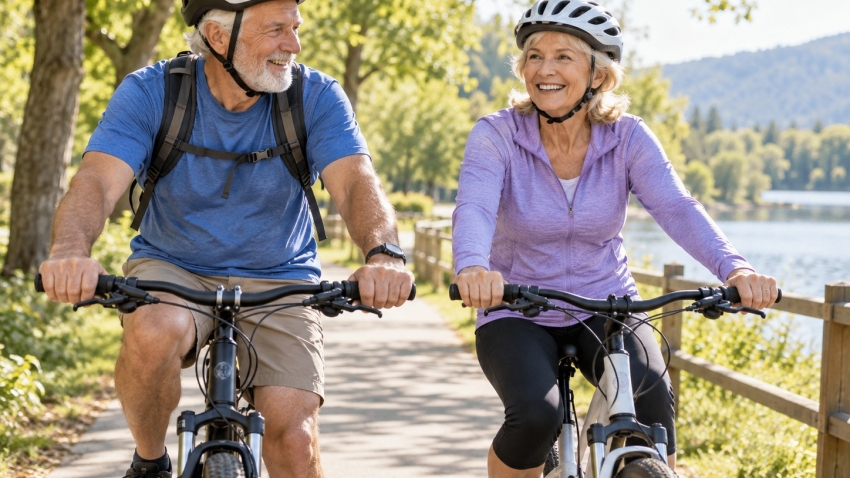
The Benefits of Biking and Hiking for Seniors
One of the most important things you can do as you age is stay active. Physical activity can help keep your bones and muscles strong, strengthen your heat, lower your blood pressure, and improve stability and balance. Being active also boosts blood flow to the brain and releases natural chemicals that improve your mood. Both aspects help reduce cognitive decline.
However, as you age, some physical activity becomes more difficult. For instance, running can be hard on your joints and lifting heavy weights can strain your muscles or even hurt your back. That doesn’t mean you should avoid all exercise, of course. It just means that you should be safe about it.
Hiking and biking are two forms of physical activity that can be safe and healthy for seniors if done properly. They’re also both outdoor activities, which give you the added benefits of being outside in nature.
Hiking as a Senior
You might think that you’re too old to hike or that going on a hike isn’t great for people who, for example, have bad knees. You’re right to be skeptical, but the truth is that hiking can be great exercise for seniors.
The key is to start simple. If you’re not a person who regularly goes for long hikes (or even long walks), don’t assume that you can step out the door and immediately embark on an all-day journey. Start with daily strolls and slowly work up to smaller trails. Take note of how you feel during and after your hike and adjust your plans accordingly.
There are a few things you can do to make your hikes easier and more enjoyable:
- Choose the right trails: Going downhill puts the most stress on your knees. If you have knee or joint pain, choose trails that don’t make you walk up and down steep inclines.
- Have plans for rest: One of the hardest parts of a hike to get through is when you feel tired or sore and there’s no suitable place to take a break. Pick paths that have flat, smooth areas where you can easily slow down. Look for spots that have benches or other places you can sit if needed.
- Stay hydrated: This is true for everyone, especially seniors. Carry water with you on your hike and drink even if you don’t feel thirsty. Dehydration is a real possibility if you’re not careful.
- Hike with others: Hiking can be a great social activity. Hike with your spouse, with friends, or join a hiking group. Being with others is good for your mental health and it’s also safer. If you’re hiking alone, be sure to bring a fully charged mobile phone with you and let somewhere know where you’re going and how long you expect to be out, just in case.
- Use the right equipment: Hiking poles or a walking stick can help improve your balance and make it easier for you to walk on uneven ground. Taking these tools with you will make the hike safer and more enjoyable. Your footwear is important as well. Choose trail shoes that provide proper support and offer good grip while you’re walking.
Biking as a Senior
Biking is another great activity that gets you out of the house and keeps your body and mind active. Cycling helps keep your heart healthy without putting significant stress on your joints. Since you’re not pounding the pavement (or the trail), your knees and ankles don’t experience as much stress. However, you can still get a good cardiovascular workout while also strengthening your legs and your core.
Cycling also helps to improve balance and coordination. Obviously, it takes balance to stay on a bike. This requires not just strength but also good posture, flexibility, and mental focus. All these strengths are important for everyday life. If you have better balance, you’ll be less likely to slip or fall, which make day-to-day activities more enjoyable and less stressful.
Here are a few ways that you can make cycling easier, more fun, and safer.
- Wear a helmet: Wearing a bike helmet that fits properly and meets established safety standards isn’t the law in every area, but it’s still a very good idea. Bicycle helmets reduce your chance of a serious head injury and can even prevent death. Even falling off a slow-moving bike can cause significant damage if you land wrong.
- Choose quiet routes: Biking beside busy traffic is difficult, stressful, and dangerous. While it’s sometimes unavoidable, try to choose calmer routes whenever possible. Local streets or streets that have dedicated (and even separated) bike lanes are the safer option. You may also have access to bike paths and trails that keep you away from cars entirely.
- Follow the rules: If you are biking alongside traffic, make sure to follow traffic rules, especially stop signs and traffic lights.
- Pick the right bike and equipment: You want to make sure to choose the right bike for your height. A properly fitted by reduces strain, helps prevent back or knee pain, and is safer and easier to control. Consider electric-assisted bikes or recumbent bikes if you’re looking for something that’s a bit easier to use and more comfortable. Your equipment maters as well. You make want to wear knee or ankle supports or cycling gloves to make the ride more comfortable.
- Stay visible: If you’re biking alongside traffic, make sure that cars and other cyclists can see you. Wear bright, reflective clothing and make sure your bike has reflectors or lights.
- Drink water: Much like with hiking (or any other exercise, truthfully), staying hydrated is important. Bring water with you and drink often. A lot of people remember to drink when the weather is hot and sunny, but they’re less likely to do it when it’s cooler or cloudy. However, whenever you’re exercising, you need water, so don’t forget to stay properly hydrated.
- Check your bike before you head out: Prior to every ride, make sure to inspect your bike or damage or issues. Make sure you have enough air in your tires, that the brakes work as they should, and that your chain is clean and properly lubricated.
Why Hiking and Biking Are So Beneficial
Both cycling and heading out on the trails can be great for your physical and mental health. A lot of seniors and retirees find themselves in a rut, so to speak, a while after leaving the workforce. It’s not uncommon to slow down and take it easy after you retire, but exercise is still important. Biking and hiking are fun activities that get you up and moving. They’re often more enjoyable than using a treadmill or lifting weights, since you’re out seeing the world while you exercise.
If you feel intimidated by these activities, know that everyone is different and you can always start slow and work up to longer hikes or rides.
Biking or hiking helps to reduce stress, protect brain function, and control blood sugar and blood pressure. Plus, these exercises aren’t harsh on your joints, but they still help you strengthen your muscles and manage your body weight. Regular exercise is crucial for heart health as well.
Plus, they’re just a great way to have fun! Whether you’re heading out on your own to ease your mind or improve your focus, or going out with friends as a social activity, hiking and biking are wonderful activities for seniors.