
Accessibility Options That Work for Your Home
One of the biggest reasons why many seniors choose to age in place in their own homes is comfort. This is your house and it’s where you feel comfortable. You decorated it the way you wanted and you made memories here. If you can stay in your home, that’s where you want to be.
However, the realities of aging mean that you might need to make some changes. Perhaps it’s harder for you to climb up stairs than it once was or maybe you worry about slipping and falling. You can make adjustments to your home to improve accessibility and safety, but you still want it to look and feel like your home. If it’s going to look like a medical facility, you might as well live in a medical facility, right? At least that might be what you’re thinking.
This attitude often causes seniors to put off making accessibility changes. However, it doesn’t have to. There are plenty of ways to make your home safer and more convenient without taking away its comfort and charm.
Improving Your House While Keeping Your Home
You want to live in your own home as long as possible. That’s understandable, but you also need t o realize that getting around and living your daily life changes as you age. Sure, right now you might feel as young as ever and your home feels the same as it always has, but that may not be the case forever.
As you age, it could become more difficult for you to walk around, bend your knees, climb stairs, or see as clearly as you do now. Many seniors also have issues with balance or stability. Slips and falls can cause serious injury and they become more likely as you age. In fact, about 25% of people over 65 report falling each year.
Adjustments to Reduce Slips and Falls
Reducing the risk of falls is one of the first things you should do to make your home more accessible. It doesn’t even take drastic changes to make your home safer. Start by clearing the walkways. Remove boxes, cords, loose rugs, and other hazards from areas where you walk frequently. Stepping on a slippery rug or over a power cord every morning when you walk into the kitchen may not be a problem now, but it could definitely become an issue in the future.
If you have any loose floorboards or unstable steps, repair them right away. Again, just because the wobbly stair going to your basement hasn’t been an issue thus far, it doesn’t mean it won’t cause injury later. Repair it now before it leads to injury.
Another small change you can make that will reduce your chances of slipping and falling is to use nonslip mats, specifically in your bathroom, shower, and kitchen. Bare-wood steps can also be a slipping hazard, both inside and outside of your home.
Another way to make it easier to move up and down stairs without slipping is to install handrails on both sides. These don’t have to look like “medical devices”, they can be standard handrails that match the décor of your home.
Devices that Match Décor
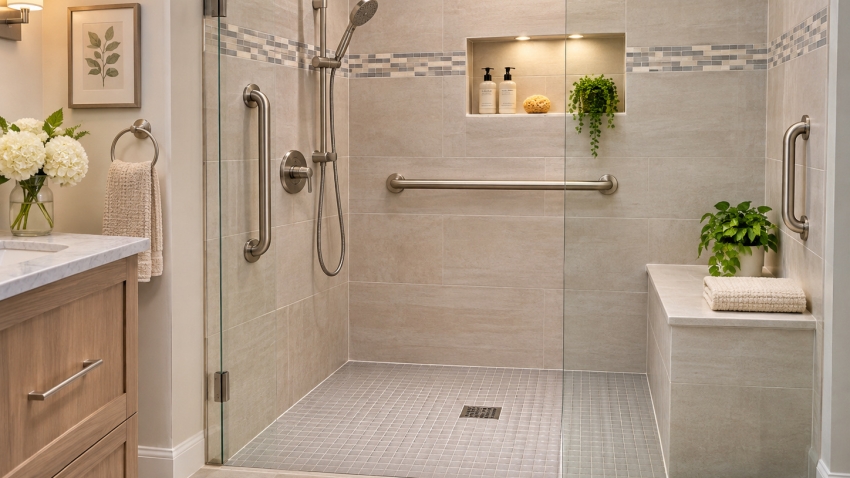
When you think of a medical facility, you probably think of shiny metal handrails bolted to the wall, often at an angle. These can be helpful, but it’s perfectly natural if you don’t like the look. There are, however, designer grab bars that fit into the look and feel of a home, so the room doesn’t scream “accessible living!”
For example, there are bathroom grab bars that double as toilet paper holders, shelves, or towel bars. These come in typical bathroom finishes like brushed chrome or matte black. Since they serve two purposes, anyone visiting your home is unlikely to notice them and you won’t have to hamper the look and feel of your space just to be safe.
There are also options for kitchens, mudrooms, and entry ways. Some serve as shelves or have picture frames or artwork integrated into their design, so they don’t stand out. You can even get low-profile wall bars that can be finished to match your kitchen cabinets!
Other Small Adjustments You Can Make
There are other ways to improve accessibility in your home without drastically changing how it looks and feels. Small things, like changing round doorknobs for lever or pull handles, can make it easier for you to open doors and less likely that you’ll slip and fall while trying to get through a door. Replacing traditional twist faucets with levers or other more accessible options can help as well. Your sink will become easier to use, and you won’t have to destroy your home décor to do it.
Improving lighting and contrast in your home is important as well. You might want to add motion-activated lights in hallways and on the stairs, for example. This will help you see where you’re going and you won’t have to reach around for a switch.
Paint can make a big different as well. For example, if you have stairs, choose a darker color for the edges of each step so it’s easier to see. This can help you safely climb the stairs even if your vision is no longer what it used to be.
Larger Changes
Of course, not every adjustment will be a small or easy one. Sometimes, you’ll need to make significant changes to your home if you wish to live there comfortably and safely as you age.
Two areas where you might want to make larger structural changes to your home are in the bathroom and anywhere you have stairs. A great place to start is with a curbless shower. This is a shower that doesn’t have a threshold or anything to step over when you enter. Removing the barrier to entry will make it easier for you to age in place, since you’ll be able to get into the shower with minimal hassle.
However, if you decide to do this, it will need to be designed correctly. Without a barrier to keep water from leaving the shower area, there’s a chance that the rest of the bathroom will get wet as well. Beyond being a hassle, that can also increase the likelihood of slipping and falling.
Make sure to slope the floors in the shower towards the drain. You may also want to consider a small lip or a sliding door. These options reduce the accessibility a bit, but they help keep the water where it’s supposed to be. Choosing a rain fixture or pointing the shower head away from the opening can help as well. Consider adding a seat and an accessible shower head (and knobs) as part of the project while you’re at it. This will help a lot.
The other area where significant design and renovation might be required is any stairs or outside your home. Many seniors have trouble walking up steps. If you have stairs leading into your home, consider building a ramp outside. Use a gentle slope to make it easier to get up and ensure that you follow all local building codes. Modify your main entrance as well, so that it’s flush with the walkway that leads to it.
Indoors, a stairlift can help you move between floors. If you don’t have the room to add one, consider moving as many essential living spaces as possible to the main floor, to minimize how often you need to go up and down.While aging in place does require changes, these changes don’t have to turn your home from a peaceful sanctuary into a medical building. By being thoughtful with your changes and blending accessibility along with décor, you can stay in your home safely while still enjoying the space.